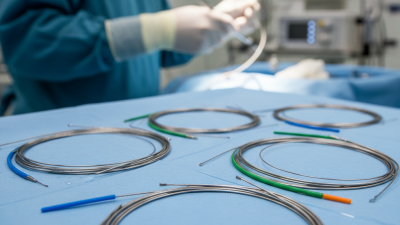
In the fast-evolving world of medical devices, there's always a growing need for innovative solutions. Take the Hydrophilic Guidewire, for example — it's a pretty vital piece when it comes to different interventional procedures. Lots of suppliers out there are offering a variety of options to help navigate tricky surgical situations with more precision.
Big names like Medtronic and Boston Scientific have earned a reputation for quality and dependability, thanks to their cutting-edge tech and focus on user-friendly designs. Still, navigating the market can feel a bit overwhelming—there are so many options, and not all products perform the way you'd hope. Sometimes, the materials or performance can fall short, which makes choosing the right supplier a real challenge.
That's why it's so important to do a bit of homework—looking into reviews, getting feedback from users, and checking out clinical data. Picking a supplier with a good track record can seriously make a difference in outcomes and overall trust. In this competitive space, making informed decisions is key—so you’re more likely to get the results you want and, more importantly, better care for patients.

Overview of Hydrophilic Guidewires and Their Applications
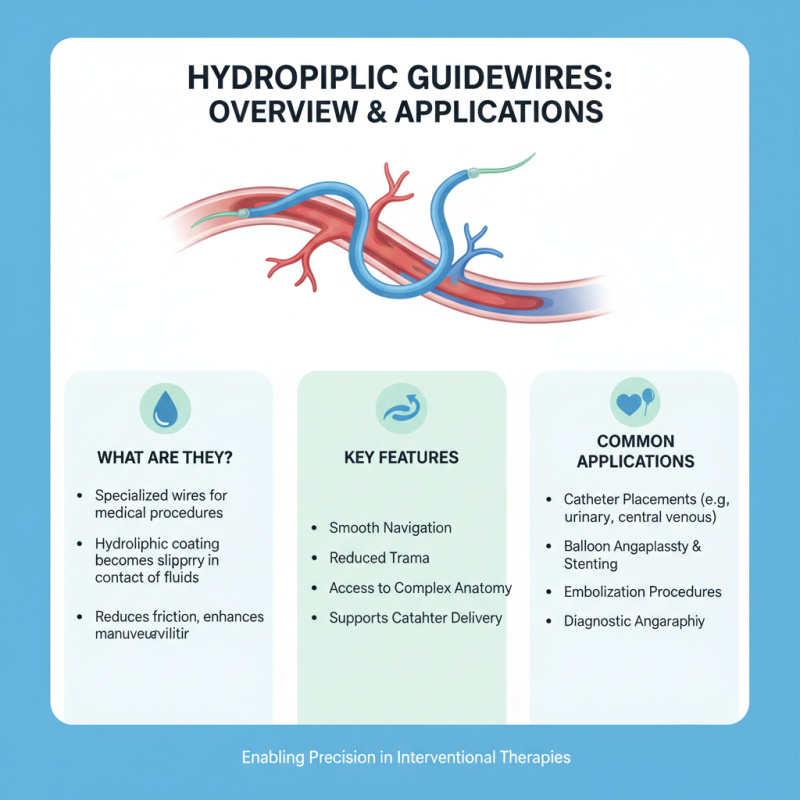
Hydrophilic guidewires play a crucial role in various medical procedures, particularly in complex interventional therapies. These guidewires are designed to move smoothly through blood vessels and navigate anatomical structures. Their hydrophilic coating allows them to become slippery when in contact with fluids, reducing friction and enhancing maneuverability. This feature is essential for procedures such as catheter placements and balloon angioplasty.
In the real world, not all hydrophilic guidewires perform equally well in every scenario. The J Tip Hydrophilic Guidewire stands out for its unique tip design. However, challenges can arise when using them in vessels with tight bends or acute angles. The selection of the right guidewire is often crucial. Medical professionals must evaluate the specific clinical situation, considering factors such as vessel size and lesion type. This evaluation requires both knowledge and experience.
Training plays a significant role in mastering these tools. Healthcare professionals need to familiarize themselves with the properties of different guidewires. Some may prefer a stiffer wire, while others may benefit from a more flexible option. Decisions made during procedures can greatly impact patient outcomes. Reflecting on these experiences can foster improvement and better practices in the ever-evolving field of interventional medicine.
Key Characteristics of High-Quality Hydrophilic Guidewires
When evaluating hydrophilic guidewires, several key characteristics emerge as indicators of quality. A Hydrophilic Coated Guidewire offers superior lubricity, facilitating smoother navigation through vasculature. This is essential in complex procedures, such as percutaneous coronary interventions, where precision is crucial. Studies show that guidewires with optimal hydrophilic coatings reduce friction substantially. This can lead to enhanced procedural success rates, underscoring the importance of high-quality materials.
The diameter of the guidewire also plays a critical role. Thinner wires provide flexibility and access to smaller vessels, while thicker wires may offer better stability in challenging environments. Reports indicate that the ideal balance between flexibility and support is pivotal for successful outcomes. Manufacturers focus on creating guidewires that maintain their integrity under pressure yet remain gentle on tissues.
Another area for consideration is biocompatibility. Materials used in a hydrophilic coated guidewire must minimize the risk of adverse reactions within the body. Industry analysis reveals that advancements in polymer science have enabled the development of coatings that not only enhance performance but also ensure safety. Regular evaluation and innovation are necessary as technology evolves, leading to potential areas for improvement in manufacturing processes.
Top Global Suppliers of Hydrophilic Guidewires: An Overview
When exploring hydrophilic guidewire suppliers globally, several factors stand out. Many manufacturers prioritize reliability in their products. These guidewires are crucial in various medical procedures, especially in interventional cardiology, urology, and gastroenterology. The surface coating of hydrophilic guidewires improves lubricity, facilitating smoother navigation through vessels.
Global suppliers vary significantly in their offerings. Some focus on innovation, continually developing new materials and coatings. Others emphasize quality control and precise manufacturing processes. This diversity leads to options that can meet various clinical needs. However, not all suppliers maintain the same level of consistency. It’s essential for buyers to evaluate the performance data and user feedback from various sources.
Additionally, the regulatory environment adds complexity. Suppliers must adhere to different medical device regulations across regions. Some companies may find compliance challenging, potentially affecting product availability. Reliable suppliers often have robust quality management systems. This guarantees that their hydrophilic guidewires meet safety standards. A thorough assessment of potential suppliers can uncover those who consistently deliver quality products while supporting healthcare objectives.
Criteria for Selecting the Best Hydrophilic Guidewire Supplier
Selecting the right hydrophilic guidewire supplier involves careful consideration of several key criteria. Quality is paramount. High-quality guidewires enhance performance, offering better navigation in complex anatomies. According to a report by the Global Industry Analysts, the hydrophilic guidewire market is expected to grow substantially, highlighting the demand for reliable products.
Another important factor is the supplier's experience and reputation in the industry. A strong track record indicates the supplier's capability and trustworthiness. Look for suppliers that provide detailed technical documentation and support. This is crucial for ensuring proper usage and efficiency in clinical settings.
Additionally, factors such as regulatory compliance and safety standards play a significant role. Suppliers must adhere to industry regulations, ensuring their products are safe for medical use. It's essential to verify certifications and quality standards. While many suppliers claim high-quality standards, some may lack transparency. Therefore, due diligence is necessary to avoid potential pitfalls. Ultimately, the choice of a supplier should contribute to effective patient outcomes, especially with complex tools like the Hybrid Hydrophilic Guidewire.
Comparative Analysis of Leading Hydrophilic Guidewire Brands
When examining the top hydrophilic guidewire suppliers, it’s vital to consider various characteristics that differentiate brands. Hydrophilic Coating Guidewires play a crucial role in medical procedures. They enhance maneuverability and reduce friction during navigation through complex anatomy. This attribute often leads to more successful catheter placements. However, not all hydrophilic coatings are created equal, and their performance can vary.
Some brands prioritize material strength, while others focus on the hydrophilic coating's durability over time. Users often report inconsistencies in coating performance, especially in humid environments. This unpredictability can lead to a sense of uncertainty among healthcare professionals. The market features many options, which can overwhelm buyers. Understanding the specific attributes of each brand is essential to make informed decisions.
Another critical aspect involves the development of innovative technologies. Some suppliers invest heavily in research and development. This can lead to advanced hydrophilic coatings that offer improved lubricity and patient safety. However, there remains a need for transparency regarding the materials used in these guidewires. A more open dialogue about production standards would benefit the industry and increase trust among users. With ongoing advancements, continuous evaluation is necessary to find the best option for medical practices.
Market Trends and Future Prospects for Hydrophilic Guidewires
Hydrophilic guidewires are essential tools in modern interventional procedures. They improve maneuverability and support complex navigation in the vascular system. These devices have gained popularity due to their effectiveness in enhancing patient outcomes during minimally invasive surgeries. The market for hydrophilic guidewires is expanding, driven by advancements in material science and manufacturing techniques.
As the healthcare industry progresses, new trends are emerging. Innovations are focusing on enhancing the coating technologies and biocompatibility of guidewires. Manufacturers are exploring alternative materials to reduce friction while maintaining performance. This evolution represents a shift towards customized solutions in medical devices, accommodating diverse patient needs.
Despite these advancements, challenges remain. Not all manufacturers can ensure consistent quality across different production batches. Issues like coating durability and wire flexibility still require attention. Regulatory hurdles can also slow the development of novel products. Buyers should stay informed about these trends as they navigate the evolving market landscape for hydrophilic guidewires.
Top Hydrophilic Guidewire Suppliers for Global Buyers
| Supplier Region | Market Share (%) | Annual Revenue ($ million) | Number of Products | Growth Rate (%) |
| North America | 30 | 150 | 50 | 5 |
| Europe | 25 | 120 | 40 | 4 |
| Asia Pacific | 35 | 200 | 60 | 6 |
| Latin America | 5 | 30 | 15 | 2 |
| Middle East & Africa | 5 | 25 | 10 | 3 |
Challenges Faced by Buyers in Sourcing Hydrophilic Guidewires
Sourcing hydrophilic guidewires can be a complex task for global buyers. One major challenge is ensuring consistent quality. Variations in manufacturing processes can lead to inconsistencies. Buyers often find themselves grappling with different standards and specifications, leading to potential complications. Communicating these needs effectively to suppliers is vital but can be daunting.
Another issue is the availability of reliable suppliers. The market is flooded with options, but not all offer the same reliability. Buyers need to navigate this crowded space carefully. Trust is paramount. Conducting thorough due diligence is necessary to identify suppliers who meet safety and efficacy standards. This process often requires resources and expertise that not all buyers may possess.
Logistical challenges also play a significant role. Shipping times and costs can significantly impact project timelines. Delays can ripple through the supply chain. Additionally, understanding local regulations is essential as they can vary significantly between regions. Buyers must often adapt to these changes swiftly. Engaging in continuous learning about regional laws and market dynamics is crucial in this ever-evolving landscape.
Maximizing Efficacy in Hybrid Procedures: The Essential Role of Zebra Guidewire
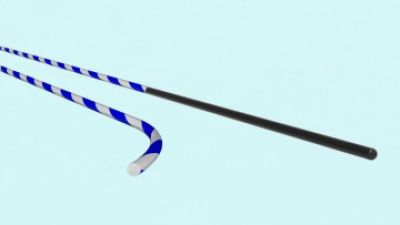
In the realm of hybrid medical procedures, the use of specialized tools is paramount to maximizing efficacy and ensuring patient safety. The Zebra Guidewire stands out as a crucial instrument tailored for minimally invasive techniques, particularly within the fields of urology and gastroenterology. Its distinctive zebra-striped coating not only serves an aesthetic purpose but also significantly enhances the functionality of the guidewire, enabling smooth navigation through complex anatomical pathways.
The design of the Zebra Guidewire is meticulously engineered to provide both maneuverability and stability. This duality is essential in procedures that demand precise movements, such as stone removal or stent placement within the urinary or biliary tracts. The guidewire’s ability to maintain a balance between flexibility and rigidity allows medical professionals to navigate intricate networks with confidence. By optimizing handling control, the Zebra Guidewire facilitates efficient and safe interventions, minimizing both procedure time and patient discomfort.
As hybrid procedures continue to evolve, the role of specialized devices like the Zebra Guidewire becomes increasingly vital. Their innovative designs contribute to improved outcomes and showcase the commitment to advancements in minimally invasive surgical techniques, ultimately benefiting both practitioners and patients alike.
FAQS
: They are used in interventional cardiology, urology, and gastroenterology. They enhance navigation through vessels.
The coating improves lubricity. This allows for smoother navigation and better maneuverability during procedures.
Buyers should evaluate performance data and user feedback. Consistency and reliability are critical factors to assess.
No, not all maintain the same level. Variations in manufacturing can lead to inconsistencies across batches.
Buyers often struggle with quality assurance and finding reliable suppliers. This can lead to complications in procurement.
Different regions have varied regulations. Compliance can be challenging and may affect product availability for suppliers.
Trends include advancements in coating technologies. There is a focus on biocompatibility and custom solutions for patients.
It helps identify trustworthy suppliers. Trust is critical in ensuring products meet safety and efficacy standards.
Shipping times and costs impact timelines. Delays in the supply chain can cause major project disruptions.
Continuous learning about regulations and market dynamics is essential. Adaptation is key in the ever-changing landscape.
Conclusion
Hydrophilic guidewires are essential tools in various medical applications, facilitating safe and effective navigation through the vascular system. These guidewires are designed to be coated with hydrophilic materials that enhance their maneuverability and reduce friction, critical for successful catheterization procedures. High-quality hydrophilic guidewires possess key characteristics such as flexibility, durability, and a smooth surface, making them pivotal for procedural success.
As the demand for these components grows, global suppliers are increasingly scrutinized based on their ability to deliver consistent quality, adherence to safety standards, and innovative designs. Buyers must consider several criteria when selecting a supplier, including product specifications, reliability, and customer support. Moreover, current market trends indicate a rising interest in advanced hydrophilic guidewire technologies, while challenges such as sourcing difficulties and regulatory compliance remain pertinent for buyers in this evolving landscape.